Archival Records for Slovak Citizenship by Descent
Expert Assessment, Tracing & Obtaining Legal Documents from Ukraine
Transform your family history into legally binding proof for Slovak citizenship by descent. With 16 years of specialized expertise, I trace and obtain archival records proving your ancestors’ ties to the First Czechoslovak Republic or Slovak ethnicity. Build a flawless evidentiary base with thoroughly verified, primary archival evidence.
150 EUR discounted from the regular price of 250 EUR for Expert Assessment
Core Takeaways
- Exclusive Focus: I locate and obtain the archival evidence of Slovak origin or citizenship by descent held in Ukraine. Filing, representation and correspondence with the Ministry of the Interior or ÚSŽZ stay with your immigration lawyer.
- Eligibility for Slovak Citizenship: Open where a direct ancestor held Czechoslovak citizenship and it descended to you generation by generation without a break. No generational ceiling applies.
- Eligibility for Ethnic Origin Certificates: A Slovak Living Abroad Certificate requires only that one parent, one grandparent or one great-grandparent was recorded as ethnically Slovak — citizenship never enters into it.
- Two-Step Workflow: #1. Expert Assessment (preliminary research); #2. Retrieval of the legal documents themselves.
Legislative Basis for Acquiring Slovak Citizenship by Descent
Links to Legal Acts Regarding Slovak Citizenship or Ethnic Origin Certificates
Two statutes govern the routes described on this page. Three further historical acts determine whether your ancestor’s Czechoslovak citizenship survived the twentieth century and reached you. All five are linked to their official sources below.
Current Laws
- Act No. 40/1993 Coll. on State Citizenship of the Slovak Republic / Zákon o štátnom občianstve Slovenskej republiky [in Slovak, current version] (on the Slov-lex website)↗ — governs the Certificate of Citizenship, and since its amendment in force from 1 April 2022 also the simplified grant for descendants to the third generation.
- Act No. 474/2005 Coll. on Slovaks Living Abroad / Zákon o Slovákoch žijúcich v zahraničí [in Slovak, current version] (on the Slov-lex website)↗ — governs the ethnic-origin certificate and the mandate of the Office for Slovaks Living Abroad (ÚSŽZ).
Historical Laws on Czechoslovak Citizenship
- Constitutional Act No. 236/1920 Coll. on the acquisition and loss of citizenship / Ústavní zákon č. 236/1920 Sb. [in Czech] (on the Zákony pro lidi website)↗ — the origin point: who became a Czechoslovak citizen in the first place.
- Act No. 194/1949 Coll. on the Acquisition and Loss of Czechoslovak Citizenship / Zákon č. 194/1949 Sb. [in Czech] (on the Zákony pro lidi website)↗ — ends paternal-line-only transmission.
- Act No. 165/1968 Coll. on Principles of Acquiring and Losing Citizenship [in Czech] (on the Zákony pro lidi website)↗ — introduces the federal Czech/Slovak distinction that later determines which successor state you inherit from.
Substantive Grounds for Acquiring
Slovak law offers three doors. Two of them open onto records I retrieve from Ukraine:
- Certificate of Citizenship of the Slovak Republic / Osvedčenie o štátnom občianstve Slovenskej republiky — for descendants of a Czechoslovak or Slovak citizen where citizenship travelled down the direct line without interruption. No generation limit.
- Slovak Living Abroad Certificate / Osvedčenie Slováka žijúceho v zahraničí — for anyone with a parent, grandparent or great-grandparent of Slovak ethnicity. It confers permanent residence and, after three years, opens a path to citizenship. Ethnicity alone is enough; no citizenship needs to be proven.
- Simplified grant of citizenship, in force since 1 April 2022 — a facilitated route without the residence requirement, for descendants to the third generation of a Czechoslovak citizen born on the territory of today’s Slovak Republic. That birthplace condition puts it outside my geography: my archives are those of the former Subcarpathian Rus, which is now Ukraine. Your lawyer will advise if it applies.
The two routes I can document are set out below.
Which Route Citizenship by descent or ethnic origin certificate
Applicants routinely pursue the wrong one and lose a year. The distinction is simple: one asks what your ancestor was legally, the other what your ancestor was recorded as.
| Certificate of Citizenship | Slovak Living Abroad Certificate | |
|---|---|---|
| Governing act | Act No. 40/1993 Coll. | Act No. 474/2005 Coll. |
| Deciding authority | Ministry of the Interior of the Slovak Republic | Office for Slovaks Living Abroad (ÚSŽZ) |
| What must be proven | Czechoslovak/Slovak citizenship, transmitted unbroken | Slovak ethnicity of one qualifying ancestor |
| Generation reach | Unlimited, provided the chain never breaks | Parent, grandparent or great-grandparent |
| Broken by the 1945–1946 loss? | Yes — usually fatal to the claim | No — ethnicity is unaffected |
| Key documents | Domovský list, census returns, passport and military files, full civil-status chain | Any record whose národnosť column reads Slovák / Slovenka |
| Immediate outcome | Recognition of citizenship you already hold | Permanent residence; citizenship possible after three years |
The two are not mutually exclusive. Where the citizenship chain fails at 1946 — which is common for Subcarpathian families — an ancestor recorded as ethnically Slovak still carries the second route intact.
Proving Slovak Citizenship by Descent
Right of Blood Principle
Slovak law rests on jus sanguinis: citizenship is inherited, not granted. A child born to a Czechoslovak citizen became a Czechoslovak citizen at birth, automatically and without any application. Nothing your family did or failed to do in the intervening decades changes that — provided the chain of descent can be documented and no link was legally severed. What you are seeking is recognition of a status you may already hold.
Degree of Kinship Eligibility
There is no generational ceiling on this route. What matters is that every link holds. The chain the Ministry examines runs:
- the ancestor held Czechoslovak citizenship;
- the ancestor still held it on the day the next generation was born;
- that birth transferred citizenship to the child by operation of law;
- the same two conditions repeat at every subsequent birth down to yours.
A single generation where the ancestor had already lost citizenship before the child was born ends the claim at that point — regardless of how many generations follow.
Starting Point — Law 1920 and Domicile Rights
Constitutional Act No. 236/1920 Coll. created the citizenry of the new republic, and it did so through domovské právo — the right of domicile, a pre-1918 Austro-Hungarian institution tying every person to one specific municipality. Your ancestor became a Czechoslovak citizen if that municipal tie fell within the republic’s borders between 28 October 1918 and 1 January 1920.
The practical consequence is that the Domovský list (certificate of domicile) is often the single most valuable document in a Subcarpathian file. It names the municipality of belonging directly, which a birth certificate alone does not. These were issued by the municipal office and survive scattered through district administration fonds rather than in one series.
Transmission Nuances of Citizenship
Which parent transmitted citizenship depends on when the child was born:
- Births under the 1920 Act:
- a child born in wedlock took the father’s citizenship;
- a child born outside wedlock took the mother’s.
- Births under the 1949 Act and later:
- citizenship passes if either parent held it, regardless of marital status.
This is why a marriage certificate is frequently decisive rather than merely supporting: for pre-1949 births it establishes which parent the law was looking at.
Loss of Czechoslovak Citizenship: Reasons and Timeframes
Four events break chains most often. The last one is specific to this region and affects a large share of Subcarpathian families:
- Naturalisation abroad. Acquiring US or Canadian citizenship generally terminated Czechoslovak citizenship automatically — under the 1868 naturalisation treaty between the United States and Austria-Hungary for the earliest emigrants, and under the 1928 US–Czechoslovak naturalisation treaty thereafter.
- Marriage to a foreigner. A Czechoslovak woman who married a foreign national before 24 June 1947 lost her citizenship ipso iure, without any act or consent on her part.
- Beneš decrees↗. Persons of German and Hungarian ethnicity were stripped of citizenship as of 10 August 1945.
- The 1945 cession of Subcarpathian Rus. Under the Czechoslovak–Soviet treaty transferring the region to the USSR, inhabitants of Ruthenian and Ukrainian ethnicity lost Czechoslovak citizenship on 1 April 1946. For anyone whose family remained in the region, this is usually the point at which the citizenship route closes — and the point at which the ethnic-origin route becomes the one worth pursuing.
Goal of Documenting Ancestor’s Citizenship
Two facts must be evidenced on paper:
- that your ancestor held Czechoslovak citizenship;
- that it passed to you through every intervening generation without a break.
The first is proved by administrative records, the second by civil-status records. A complete file usually draws on:
- birth, marriage and death certificates for every person in the direct line;
- the certificate of domicile (Domovský list) and the underlying municipal domicile roll;
- district and municipal residential registers;
- the Czechoslovak censuses of 1921 and 1930 (Sčítání lidu), which record citizenship and ethnicity side by side;
- passport applications and travel files;
- military registration and service records;
- school enrolment and teacher records;
- further records evidencing citizenship rights.
Territorial Scope
My work covers Subcarpathian Region (Podkarpatská Rus) — the easternmost province of the First Czechoslovak Republic from 1919 to 1939, today Zakarpattia Oblast in Ukraine. The territory passed through Hungarian administration between 1939 and 1944 and was ceded to the Soviet Union in 1945, and its records reflect every one of those turns. Google Maps
Ethnic Origin Certificate of Slovak Living Abroad
Degree of Kinship Eligible for Ethnic Origin Certificate
One qualifying ancestor is enough: a mother or father, or any one of the four grandparents, or any one of the eight great-grandparents, shown to be of Slovak ethnic origin. There is no requirement that the line be male, unbroken, or continuous in any legal sense — this route asks a question about identity as it was recorded, not about legal status as it was transmitted.
Slovak Ethnicity Meaning
The test is documentary and literal. A historical record must state the ancestor’s ethnicity in explicit terms — Slovák, Slovenka, Slovenská, Slováci — under § 2(a)(2) of Act No. 474/2005 Coll. on Slovaks Living Abroad (Zákon č. 474/2005 Z. z. o Slovákoch žijúcich v zahraničí).
That statement must appear in the record’s národnosť field — the nationality/ethnicity column, distinct from the citizenship column that sits beside it in most Czechoslovak-era forms. The two are routinely confused by applicants: a person could be a Czechoslovak citizen of Hungarian národnosť, or a Slovak by národnosť holding no Czechoslovak citizenship at all. Only the second helps you here.
Language of instruction, religion and surname morphology are not substitutes. ÚSŽZ looks for the word itself.
Where the Word Actually Appears
In Subcarpathian holdings, an explicit národnosť entry turns up most reliably in:
- the 1921 Czechoslovak census returns — the richest single source, since both censuses recorded ethnicity as a separate declared field for every household member;
- school registration and teacher personnel files, where pupils’ národnosť was recorded annually;
- interwar municipal and district electoral rolls;
- passport and travel-document applications;
- military registration cards;
- Soviet-era personal files, internal passport records and workplace forms, which continued to record ethnicity in the same column logic through 1991.
That last category matters more than people expect. Where interwar records were destroyed, a Soviet-period file recording an ancestor as Slovak can carry the claim on its own.
Goal of Documenting Ancestor’s Ethnic Origin
The objective is narrower than a genealogy: certified archival records in which the word appears, plus the civil-status documents linking that named person to you. Two or three well-chosen records generally outperform a thick file of material that never states ethnicity outright.
Territorial Scope
Slovak communities in what is now Ukraine were concentrated in Zakarpattia — with a documented presence in and around Uzhhorod, Svaliava, Perechyn and Velykyi Bereznyi — and in scattered settlements further into Galicia, Volhynia and Southern Ukraine. I work across all of them.
Your expert
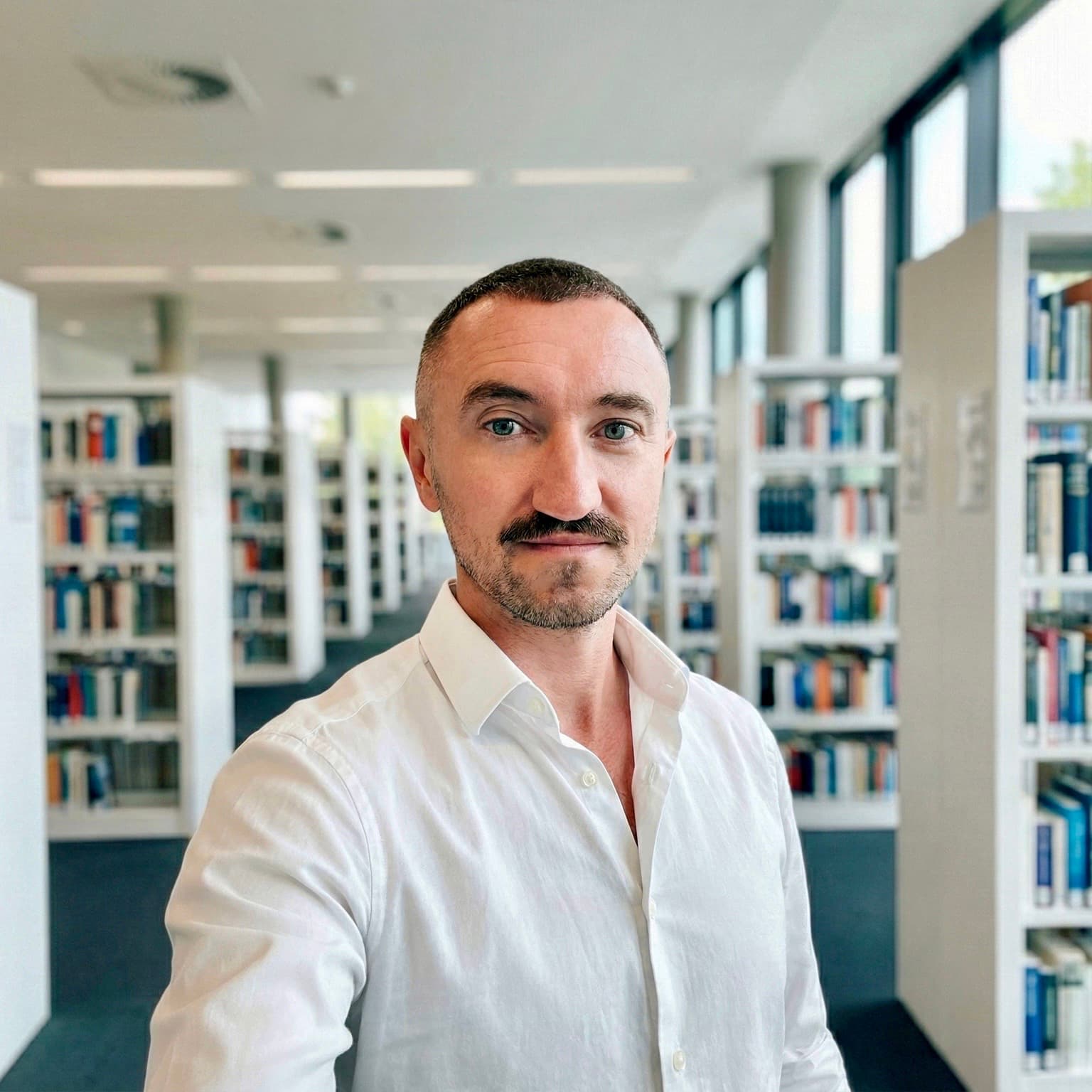
Oleg Verbliudov Your Expert Genealogist in Ukraine & Eastern Europe since 2009
Slovak files are a specific discipline within my practice. The records sit in Ukrainian custody, in Czech, Hungarian, Slovak and Russian, across two branches of one regional archive and a scatter of district registry offices — and the applicant is usually somewhere else entirely, working through a lawyer who has never had to correspond with Berehove. I close that gap: I locate the evidence, obtain it in certified apostilled form, and hand it over ready to file.
I work for private applicants and, increasingly, for the immigration firms handling their cases. Whether your claim rests on unbroken Czechoslovak citizenship or on an ancestor recorded as Slovak in a 1921 census return, the deciding question is the same: does the document exist, and can it be obtained. Let me answer that first.
Related products
-

Ukrainian citizenship
150 EUR discounted from the regular price of250 EURfor Expert Assessment -

Jewish Origins
150 EUR discounted from the regular price of250 EURfor Expert Assessment -

Genealogical Research
150 EUR discounted from the regular price of250 EURfor Preliminary Research -

Hungarian citizenship
150 EUR discounted from the regular price of250 EURfor Expert Assessment