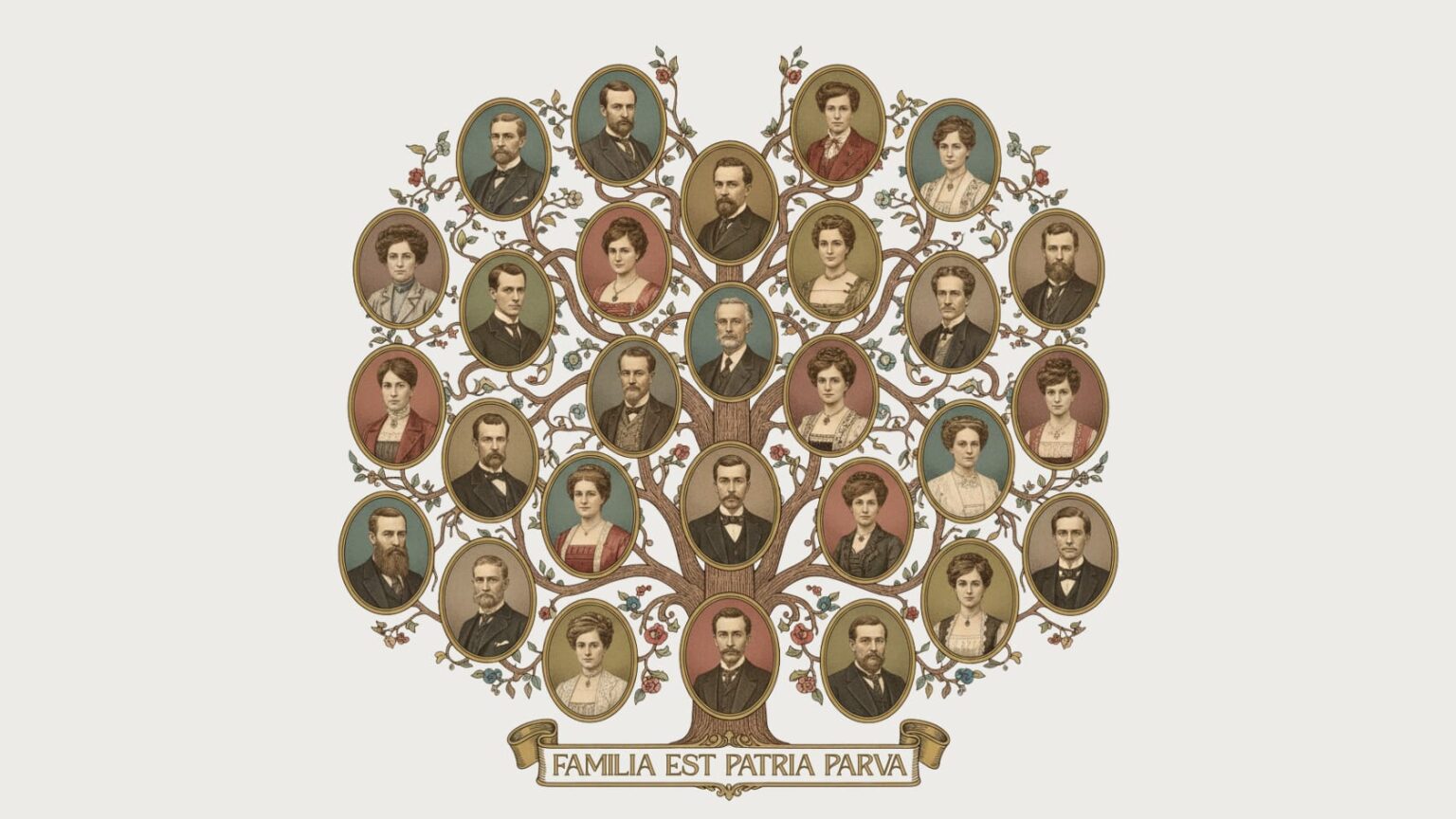
Genealogy Research in Ukraine and Eastern Europe
Professional and accurately documented genealogical research from an expert with 16 years of experience in Ukrainian and Eastern European archives. I thoroughly combine reliable archival sources with expert analysis to reconstruct your family history across shifting eras, borders and languages.
150 EUR discounted from the regular price of 250 EUR for Preliminary Research
Main genealogical research: 90 EUR 40 EUR / hour
Minimum order: 20 hours
Core Takeaways
- Deliverables: Sourced report + scanned copies of archival documents + translation + pedigree chart. Sample.
- Research Coverage: Eastern European records spanning the ~1680s through the 2020s. Map of archival activities.
- Start requirement: # 1. Information from you, please fill out the form. # 2. Preliminary Research / Expert Assessment.
- Pricing: Hourly rate. Minimum order is 20 hours.
Deliverables of genealogy research in Ukraine
Family history report
Copies of records
Pedigree chart
Support
Sample report
The sample report on genealogical research in Ukraine with copies of the located archival documents, their translations, explanations, interpretations, and a genealogical tree in chart form.
Geographical area: Eastern Ukraine
Chronological scope: 1870—1900
Discovered ancestors: 28 new persons in 3 generations
Time expenses: 20,12 hours
Information in genealogical research
The following information can be found during tracing roots in Ukraine and Eastern Europe.
Ancestors’ names
Date of birth
Place of birth/residence
Social status
Religion
Family ties
* Patronymic↗ name
Patronymics is not always recorded in Ukrainian archival documents. Specifically, for men, patronymic names are practically absent in documents from the 17th to the mid-18th century. Meanwhile, for women, the patronymic name was often not indicated in documents from the 18th to the mid-19th century.
** Maiden name
Additionally, the maiden name for women cannot always be established during the family history research. For example, archival birth records in Ukraine (especially for the 1860s–1930s) are much better preserved than marriage records.
*** Family ties
Consequently, side lines of the family tree may not always be established during tracing roots in Ukraine. This is because the ancestor could be the only child in the family; moreover, their siblings may not have survived to adulthood (due to the high infant mortality in those times) and not leave significant archival information about themselves.
Expert Assessment Preliminary genealogy research in Ukraine
It is not possible to start genealogical research immediately, even if complete and necessary input information about ancestors has been provided. Preliminary genealogy research involves a thorough study of broad sources and important aspects, such as:
Identifying the history of the territory
Evolution of the administrative and territorial organization of the ancestors’ localities is an important part of the genealogy research in Ukraine and Eastern Europe because all archival documents are stored according to territorial principles. There were at least 24 territorial reforms and reorganizations in Ukraine between 1780 and 2020. Analysis of geographical dictionaries and old maps is a cornerstone for tracing ancestors.
Checking the preservation of documents
Not all archival records were preserved: many documents were destroyed during the Second World War 1939—1945, some were preserved but misplaced in other archives or other countries. Studying the availability of archival documents through inventories, catalogs and existing reference tools provides a clear scope of the family history research.
Verifying the provided facts
Initial facts about ancestors may be vague and tangled. Based on years of my experience: ¾ of immigrants from Eastern Europe gave altered places of birth in ship manifests, nearly all listed incorrect birth dates in naturalization records, and 100% were insincere in their refugee cards. Fact-checking allows an assessment of whether the research is heading in the right direction and on the correct path to trace Eastern European ancestors.
Eliminating and clarifying possible risks
There are no databases on Ukrainian archival records like MyHeritage or Ancestry. During the genealogical research in Eastern European countries, I work with “raw” documents through both on-site archival access and online. Identifying all possible outcomes makes results more predictable.
Expert Assessment is an essential and required 1st step of any genealogical research. With this preliminary research you will find out what could be found, what couldn’t be found and why, what is the possible depth of the research, what documents preserved and what is lost, insights on your ancestors life.
Cost of the Expert Assessment: 250EUR 150EUR
Timeframe: 7—14 days
Samples of archival documents for genealogy research in Ukraine

Vital Records, Ukraine [USSR], 1943 — Birth Records, front
UA DAZhO (State archive of Zhytomyr region), fonds R-5069, series 26, file 26, page 48

Metrical (synagogue) book, Jewish, Ukraine [russian Empire], 1917 — Birth Records
UA DAZhO (State archive of Zhytomyr region), fonds 67, series 3, file 620, page 373 back — 374
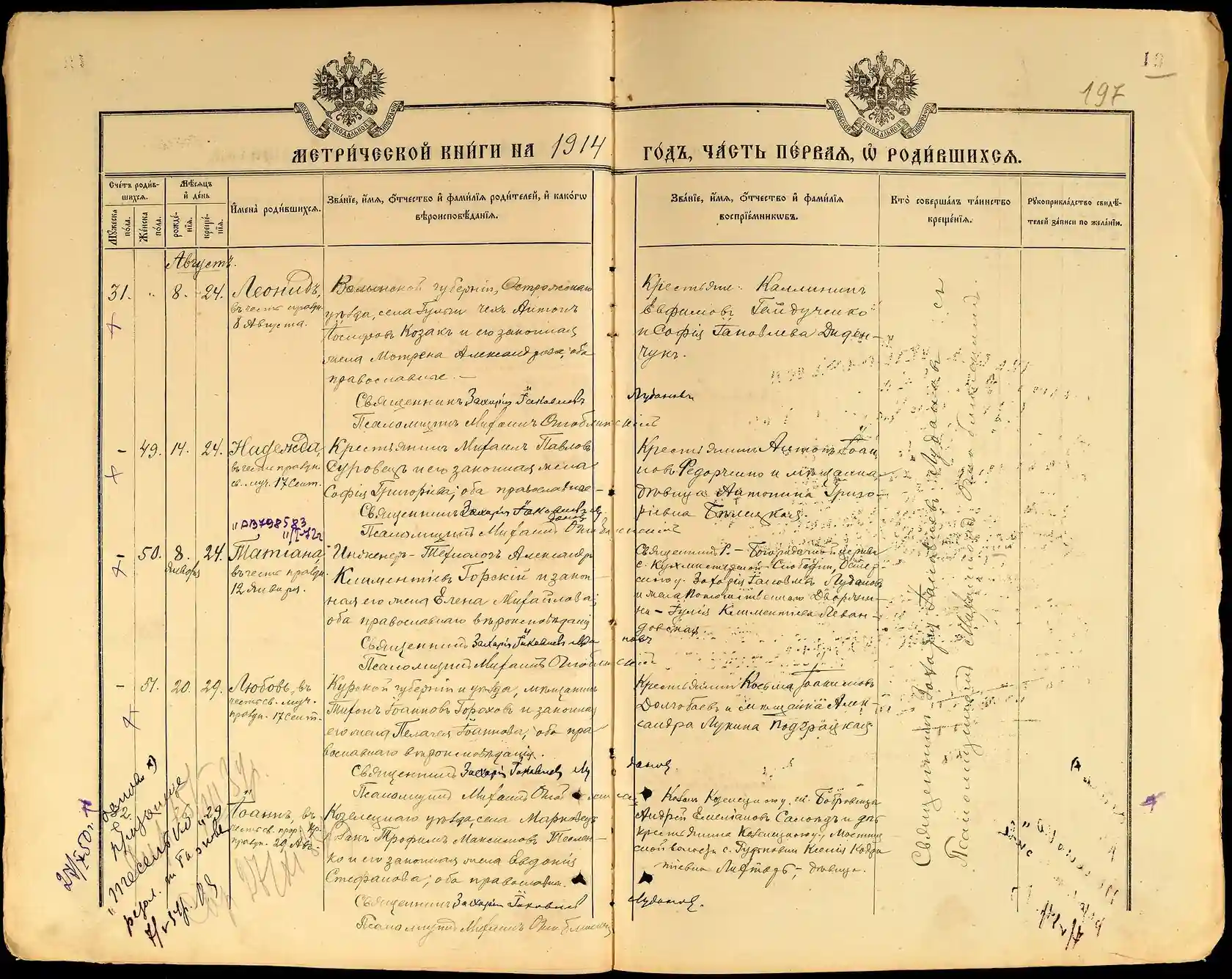
Metrical (church) book, Orthodox, Ukraine [russian Empire], 1914 — Birth Records
UA TsDIAK (Central state historical archive of Ukraine, Kyiv), fonds 2011, series 1, file 150, page 196 back — 197
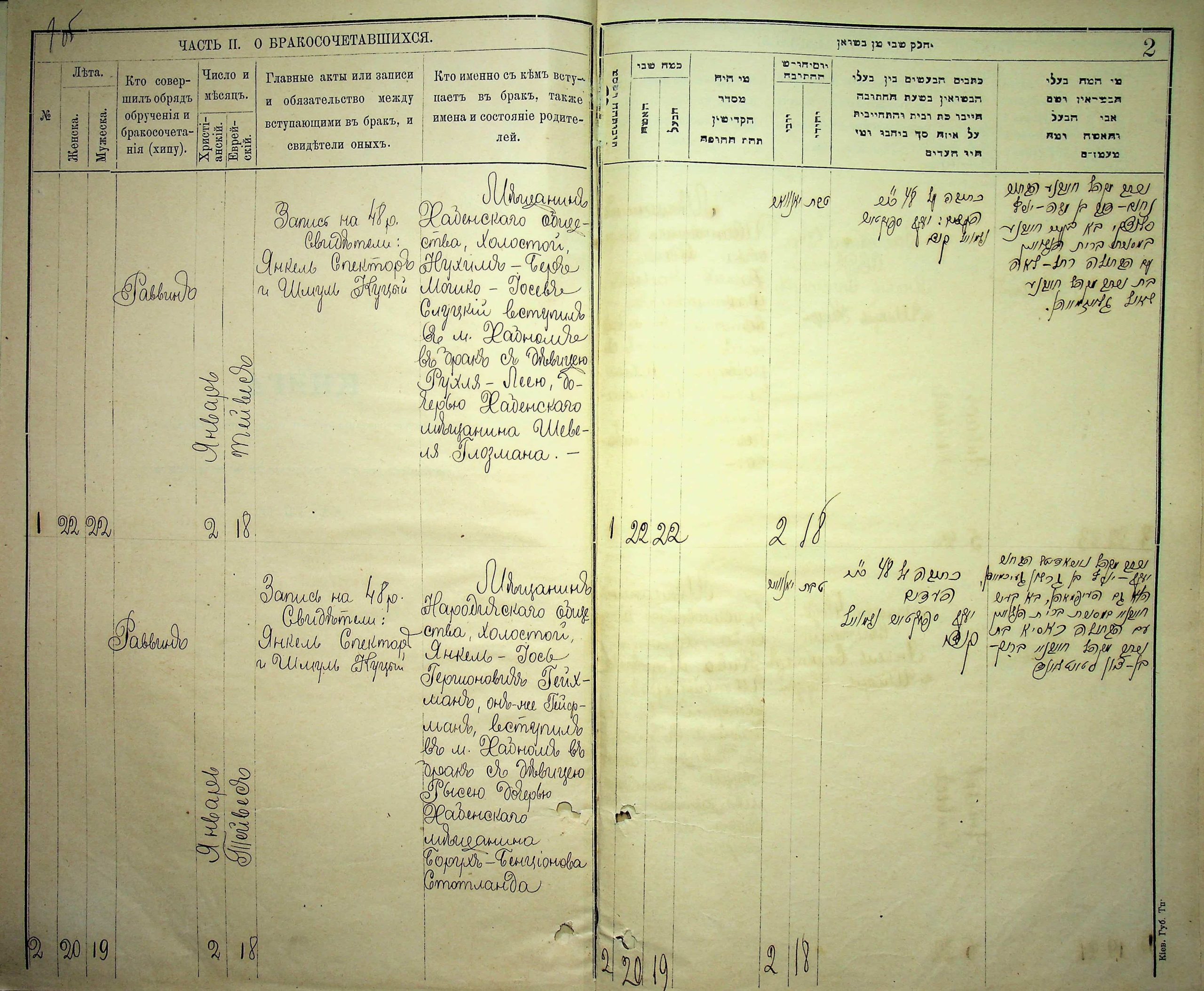
Metrical (synagogue) books, Jewish, Ukraine [russian empire], 1906 — Marriage Records
UA TsDIAK (Central state historical archive of Ukraine, Kyiv), fonds 1167, series 1, file 503, page 1 reverse — 2

Vital Records, Ukraine [USSR], 1925 — Marriage Record
UA DAKO (State archive of Kyiv region), fonds R-5634, series 1, file 372, page 70

Metrical (synagogue) book, Jewish, Ukraine [russian Empire], 1915 — Death Records
UA TsDIAK (Central state historical archive of Ukraine, Kyiv), fonds 1167, series 1, file 373, page 2 reverse
FAQs
About genealogy overall
What is genealogy?
Genealogy, or genealogical research, refers to the process of collecting, systematizing, and analyzing information about ancestors’ origins and their family relationships. Researchers use archival sources and published materials to gather as much detail as possible.
What is a family tree?
A family tree is essentially a schematic representation that illustrates the family relationships between a specific person, their ancestors, and descendants.
What is a genealogical line?
In simple terms, a genealogical line refers to one branch of a genealogical tree. For example, this could be either the paternal (father’s) or maternal (mother’s) line, depending on the ancestor being traced.
About genealogical research
Which regions of Ukraine and Eastern Europe do you cover?
I work with all oblasts (regions) of Ukraine, including those with complex archival histories—Kyiv, Lviv, Kharkiv, Poltava and more. I also research neighboring territories that once belonged to the Austro-Hungarian Empire, Russian Empire, Kingdom of Romania and Polish–Lithuanian Commonwealth.
What documents do I need to begin genealogical research in Ukraine?
If the last known to you ancestor was born before 1945, no documents required from you. Provide any information you already have, such as full names, approximate birth/death dates, and places of residence. Ideal starting documents include birth, marriage, or death certificates; immigration or naturalization records; family letters; and any existing family trees. Even incomplete data helps narrow archival searches.
Which languages do you work with in the documents?
I work with archival documents in English, Ukrainian, Russian, Latin, Polish, German, Hungarian, Czech, Latvian, and Romanian. The report text and translations I provide in English.
How far back can you trace my family tree?
In most cases, genealogical research in Ukraine and Eastern Europe can trace a family tree back to the late 17th or early 18th century, typically between the 1680s and 1720s. However, in some rare cases, it might be possible to extend it back to the 16th century.
How long does a standard genealogical research project take?
Comprehensive genealogical research in Ukrainian archives usually takes 5—18 months.
The research can be divided into segments or stages. Subsequent 20-hour blocks of research can be scheduled as needed and usually takes 2—4 weeks. Complex cases requiring deep archival dives may extend timelines accordingly.
What is included in the genealogical report?
Your comprehensive report includes:
- Transcribed and translated copies of all located documents
- Analysis of archival findings and context
- A pedigree chart in graphical form
- A narrative summary of each ancestral line, with source citations
What types of archival documents are available for Ukrainian genealogical research?
Ukrainian archives contain various types of genealogical records spanning different historical periods and religious communities: church metrical books, revision lists, confession lists, marriage banns, census records, jewish vital records, property cadastres, military service files, nobility evidence files, household registers, passport application files, notary acts, voter lists, files of the repressed, resident lists, tax lists, and many more.
Unfortunately, not all documents preserved well, many of them were destroyed during the 2nd World War.
Can you access both civil and church records?
Yes. Earliest civil records in Ukraine (Transcarpathia) date from 1895 onward, while some church registers (Orthodox, Greek-Catholic, Roman-Catholic, Protestant, Jewish, etc.) can extend back to the 17th century. I combine on-site archival visits with digital catalog searches to locate both civil and ecclesiastical sources.
Do you offer DNA research or integration?
While I do not perform DNA tests myself, I can interpret and integrate your DNA match data into your family tree. This includes triangulating genetic matches with documentary evidence to confirm relationships and uncover new ancestral lines.
About accuracy & privacy
How do you ensure the accuracy of findings?
I verify facts thoroughly across multiple sources—civil registers, church books, census and tax records, residential documents. I also study territorial‐history guides to account for boundary changes and lost archives, minimizing risk of misidentification.
What do the success and timeframe of genealogy research in Ukraine depend on?
The success and timeframe of genealogical research rely on several factors. Specifically, it depends on the following key considerations:
Completeness of the initial information
To determine this, a straightforward formula is useful: name — date — location, or who? where? when? The more complete the information about the ancestor, the more precise the search becomes. A complete name helps pinpoint the individual with accuracy, eliminating potential errors or confusion. Additionally, having an approximate date, such as the time of birth, marriage, or death, will determine what types of historical sources will be useful for research. Furthermore, knowing the location where a significant event occurred gives you insight into where these relevant sources can be found.
Reliability of the initial information
The reliability of the data has a considerable impact on how quickly progress is made. If there is an error in the initial data, it will significantly slow down the search. However, when there are available documents about the last known ancestor, the research process not only accelerates but also improves in terms of completeness and clarity.
Place of birth (residence) of the last known ancestor
Significantly, in genealogical research, one important principle is territorial grouping of archival documents. Certainly, the preservation of documents can differ based on geography. For example, World War II destroyed many records. Particularly, the Poltava region faced great losses, where significant documents were destroyed during military actions.
Social status of the ancestor
Another factor to consider is that the Russian Empire and the Austro-Hungarian Empire operated as estate-based states. Consequently, this had an impact on how each person’s life was structured. Archives stored documents from different estates in various collections, but they did not preserve these records consistently.
Religious affiliation of the ancestor
Before 1919, religious institutions such as churches, synagogues, mosques, and prayer houses typically handled birth, marriage, and death registrations. The law of the Russian Empire regulated religion during this period. Knowing the religion of an ancestor can help identify what type of documents survive, the depth of the search required, and the potential volume of information collected during genealogy research in Ukraine.
How is my personal information protected?
Your data is protected under GDPR (our Data Protection Policy) and by design: I keep no client database, CRM, or mailing lists — your information exists only in our direct correspondence and legally required payment records. Information about your family is shared with archives and record custodians only to the extent needed to fulfil your research request. Digital files are stored on encrypted drives, and physical records accessed on-site are never removed from archival premises without proper authorization. Everything is TLS-encrypted, hosted in the EU, and deletable on your request; I also sign nondisclosure agreements upon request.
About pricing, terms & conditions
How are fees structured and payment terms?
My hourly rate is 40 EUR/hour, 20 hours is a minimal order.
A non-refundable Expert Assessment fee of 150 EUR precedes research work.
Invoices are payable via bank transfer (including neobanks as Wise, Revolut etc.), PayPal, or cryptocurrencies.
What are the terms and conditions?
Short descriptions of Terms and conditions:
1) Initial stage: you filling out the form and paying for Expert Assessment, I provide you with the preliminary report
2) Research stage: you paying the research fee, I conduct the research and provide you with the report
3) Repeat Research stage if needed
Can you handle research for non-Ukrainian speakers?
Yes. I provide translations from Ukrainian, Russian, Latin, Polish, German, Hungarian, Czech, Latvian, and Romanian into English. All report narrative, document transcriptions, and translations are delivered in English unless otherwise requested.
Your expert

Oleg Verbliudov Your Expert Genealogist in Ukraine & Eastern Europe since 2009
Specializing in Ukrainian and Eastern European genealogical investigations for 16 years, I deliver authentic archival evidence of family history to clients worldwide. Let’s get started on this fascinating journey into your family’s past today!
Related products
-

Hungarian citizenship
150 EUR discounted from the regular price of250 EURfor Expert Assessment -

Heir Tracing
40 EUR / hour discounted from the regular price of90 EUR -

Birth Certificate
150 EUR / document discounted from the regular price of250 EUR -

Death Certificate
150 EUR / document discounted from the regular price of250 EUR