Archival Records for Polish Citizenship by Descent
Expert Assessment, Tracing & Obtaining Legal Documents from Ukraine
Establish your ancestral rights to Polish citizenship by descent or a Pole’s Card with legally binding documentation. With 16 years of specialized expertise, I retrieve certified vital records and historical proof of Polish origins directly from state authorities in Ukraine. Secure a flawless evidentiary base for your immigration lawyer with thoroughly verified, primary archival evidence.
150 EUR discounted from the regular price of 250 EUR for Expert Assessment
Core Takeaways
- Exclusive Focus: My practice focuses on the procurement of legal archival records proving to Polish origin or Polish citizenship by descent from the territories now within Ukraine, leaving process representation entirely to your immigration lawyer.
- Eligibility for Polish Citizenship: You qualify if a direct ancestor held Polish citizenship and passed it continuously to you according to the historical Polish acts on citizenship.
- Eligibility for Pole’s Card: If one of your parent, or one grandparent, or two great-grandparents were of Polish ethnicity.
- Required Evidence: Documenting your claim requires specific historical and vital records establishing the unbroken transmission of citizenship or documents containing a clear designation of Polish nationality.
- Two-Step Workflow: #1. Expert Assessment (preliminary research); #2. Retrieval and obtaining of the legal documents.
Legislative Basis for Acquiring Polish Citizenship by Descent
Links to Legal Acts Regarding Polish Citizenship or Pole’s Card
Below are links to the current Act on Polish Citizenship, court decisions and historical acts on various repositories regarding acquiring, transmission and loss of Polish citizenship:
Current Laws
- Act of 2 April 2009 on Polish Citizenship / Ustawa z dnia 2 kwietnia 2009 r. o obywatelstwie polskim [in Polish, current 2025 version] (on the Sejm of the Republic of Poland website)↗
- Act of 7 September 2007 on the Pole’s Card / Ustawa z dnia 7 września 2007 r. o Karcie Polaka [in Polish, current 2025 version] (on the Sejm of the Republic of Poland website)↗
Historical Laws on Polish Citizenship
- Historical Act of 20 January 1920 on the Citizenship of the Polish State / Ustawa z dnia 20 stycznia 1920 r. o obywatelstwie państwa polskiego [in Polish] (on the Sejm of the Republic of Poland website)↗
- Act of 20 January 1920 on the Citizenship of the Polish State [in English] (on the Global Citizenship Observatory (GLOBALCIT) website)↗
- Historical Act of 8 January 1951 on Polish Citizenship / Ustawa z dnia 8 stycznia 1951 r. o obywatelstwie polskim [in Polish] (on the Sejm of the Republic of Poland website)↗
- Historical Act of 15 February 1962 on Polish Citizenship / Ustawa z dnia 15 lutego 1962 r. o obywatelstwie polskim [in Polish] (on the Sejm of the Republic of Poland website)↗
Supreme Court Decision on Discriminations of the 1951 Act
Historical Laws on Military Duty and Service Age
- Historical Provisional Act of 28 October 1918 on the Universal Military Service Obligation / Tymczasowa ustawa z dnia 28 października 1918 r. o powszechnym obowiązku służby wojskowej [in Polish] (on the Sejm of the Republic of Poland website)↗
- Historical Act of 23 May 1924 on the Universal Military Service Obligation / Ustawa z dnia 23 maja 1924 r. o powszechnym obowiązku służby wojskowej [in Polish] (on the Sejm of the Republic of Poland website)↗
- Historical Act of 9 April 1938 on the Universal Military Obligation / Ustawa z dnia 9 kwietnia 1938 r. o powszechnym obowiązku wojskowym [in Polish] (on the Sejm of the Republic of Poland website)↗
- Historical Act of 4 February 1950 on the Universal Military Obligation / Ustawa z dnia 4 lutego 1950 r. o powszechnym obowiązku wojskowym [in Polish] (on the Sejm of the Republic of Poland website)↗
Substantive Grounds for Acquiring
Polish legislation on citizenship is quite complex, taking into account numerous legal and historical factors. Current framework establishes three primary pathways for the acquisition of Polish citizenship by descent:
- by proving Polish citizenship: if one of your direct ancestor held Polish citizenship and passed it without interruption to you
- by Polish ethnic origin (Pole’s Card / Karta Polaka pathway): if one of your parents or grandparents, or any two of your great-grandparents were of Polish ethnicity, you may receive a Pole’s Card (officially called “Karta Polaka”) and a permanent residence permit. After three years of permanent residency, you are eligible to apply for citizenship
- by repatriation: very specific pathway applied only for those who had permanent residency in Asian parts of the former USSR before January 1, 2001, but not their descendants. This pathway will not be considered on this page.
Let’s examine each of these two available options in detail.
Request now Polish citizenship legislation operates under the legal doctrine of jus sanguinis (right of blood) which follows from the Article 14 Point 1) of Act of 2 April 2009 on Polish Citizenship. Under this framework, citizenship passes continuously from parent to child across generations, extending globally. If a parent held Polish citizenship at the time of their child’s birth, the child automatically acquired that citizenship. Proving Polish citizenship by descent does not operate through a fixed degree of kinship limit, it entirely depends on continuous transmission of Polish citizenship through each generation. Because the doctrine of jus sanguinis applies retroactively (Article 2 of the Act of 2009), the laws active during your ancestor’s life events (Citizenship Acts of 1920, 1951, 1962, 2009) dictate the validity of your claim today. This framework could be explained with the following simplified model: Polish citizenship rights were granted by Article 2 of the Act of 20 January 1920 on the Citizenship of the Polish State (Ustawa z dnia 20 stycznia 1920 r. o obywatelstwie państwa polskiego) to everyone settled on 31 January 1920 within the newly established borders of the Polish State (see the map), unless they are entitled to citizenship of another country. Regarding the eastern territories of the Second Polish Republic, the Article outlines these specific requirements: The transmission and continuity of Polish nationality are governed by the historical Acts, applying according to the following chronology: Provisions regarding the loss of Polish citizenship also follow historical acts, applying according to the following chronological framework: Securing Polish citizenship by descent requires official documentation establishing two fundamental facts: Building this required evidentiary base involves retrieving specific categories of historical and vital records: The strict internal administrative guidelines used by the Polish Ministry of Interior and Administration (MSWiA) and the Voivodeship offices (Urząd Wojewódzki) demand an apostille on all official documents proving Polish citizenship or kinship. Below are specific examples of legal archival documents that serve as primary evidence for establishing Polish citizenship by descent. indicating that the ancestor was born in 1928 on the territory, which was part of Poland at that time [State Archives of Ternopil Region] showing the legalization of the document in accordance with the 1961 Hague Convention for international use [Ministry of Justice of Ukraine] showing the authentication of the record [State Archives of Ternopil Region] proving Polish citizenship of ancestors [State Archives of Ternopil Region] showing the legalization of the document in accordance with the 1961 Hague Convention for international use [Ministry of Justice of Ukraine] showing the authentication of the record [State Archives of Ternopil Region] showing the authentication of the record [State Archives of Ternopil Region] My professional expertise focuses on ancestors from Volhynia and Halychyna/Galicia—specifically the territories of the Second Polish Republic (II Rzeczpospolita) that are now within Ukraine. You may find a precise interactive map of interwar Poland (1920—1939) within contemporary borders below, and it is also available through an external link. Precise Interactive Map of the Second Polish Republic (II Rzeczpospolita) 1920—1939 The degree of kinship required to apply for the Pole’s Card is established in Article 2, Paragraph 1, Point 3 of the Act on the Pole’s Card. This specific clause defines the exact ancestors that satisfy the bloodline requirement. You must prove the Polish nationality of: Current Polish legislation does not have the clear definition of Polish nationality/ethnicity (narodowość polska). Article 13, Paragraph 3 of the Act on the Pole’s Card contains a list of documents serving as confirmation of Polish origin. Yet the first two points can be misleading. For instance, Point 2) refers to “civil registry acts or their extracts, baptismal certificates, school certificates, or other documents confirming a connection with Polishness.” It is important to understand that interwar Polish vital acts or church records entirely omitted nationality/ethnicity. School records similarly excluded this information. Likewise, the historical “Polish identification documents” mentioned in Point 1) remain in the personal possession of their owners or in their family archives; state archives preserve copies of such records only in highly exceptional cases. Possessing a clear understanding of Polish origin (discussed above), we can definitively establish the objective of documenting Polish origin: securing comprehensive documents containing a clear designation of “Pole/Polish” in the “Nationality/Ethnicity” column. Below are several examples of legal archival documents containing Polish nationality. indicating that the ancestor’s parents were Polish [State Archives of Sumy Region] showing the Polish nationality/ethnicity of the deceased [Civil Registry Offices of Ukraine (DRATs)] indicating Polish nationality of the entire family [Village Council (Silska hromada)] With 16 years of specialized expertise, my practice focuses on the procurement of legal archival records pertaining to Polish origin and Polish citizenship by descent. I furnish critical evidentiary support to individuals, immigration agencies, and legal professionals with the exact documentary evidence required to restore Polish citizenship or to prove ancestral Polish origins. Whether you are looking for the right documents for Polish citizenship or your Karta Polaka, I am here to provide the solid foundation you need. Together, we will document your family lineage and secure the necessary historical records.Proving
Polish Citizenship by Descent
Right of Blood Principle
Degree of Kinship Eligibility — Any Direct Ancestor
Starting Point — Law 1920 and Granting Citizenship
Transmission Nuances of Polish Citizenship
Loss of Polish Citizenship: Reasons and Timeframes
Goal of Documenting Ancestor’s Polish Citizenship
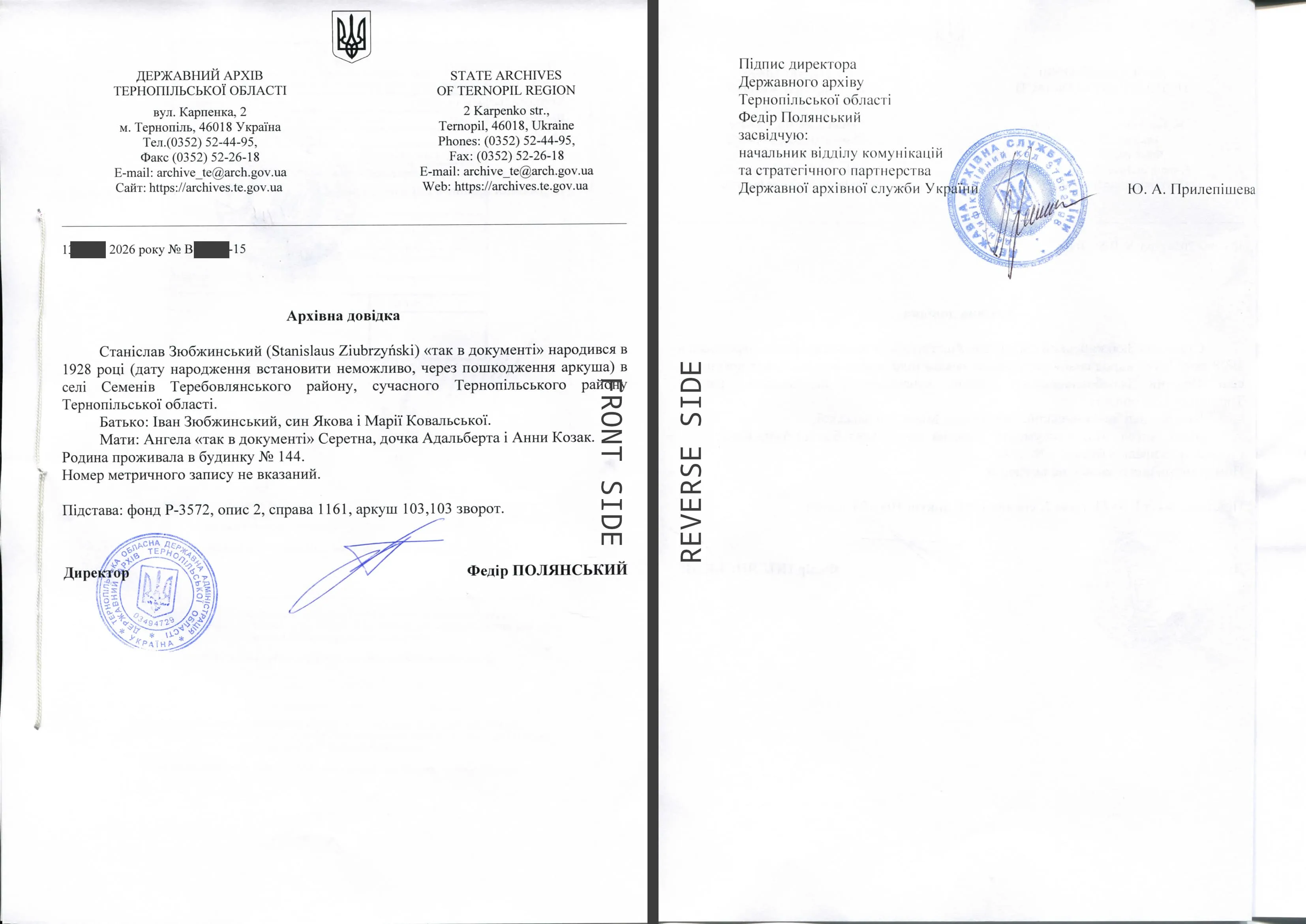
Archival birth certificate for proving Polish citizenship by descent (Ukraine)
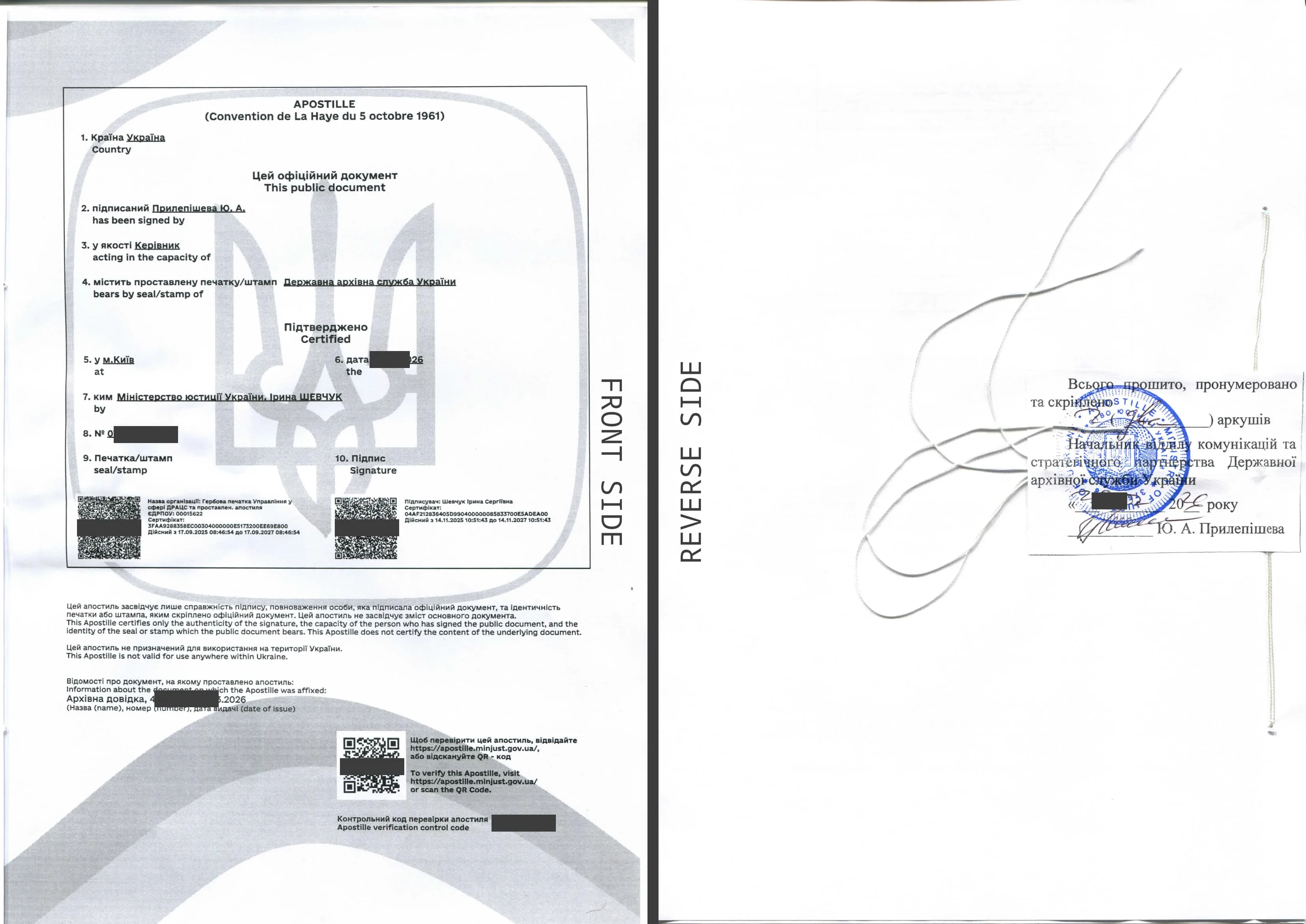
Apostille on archival birth certificate (Ukraine)
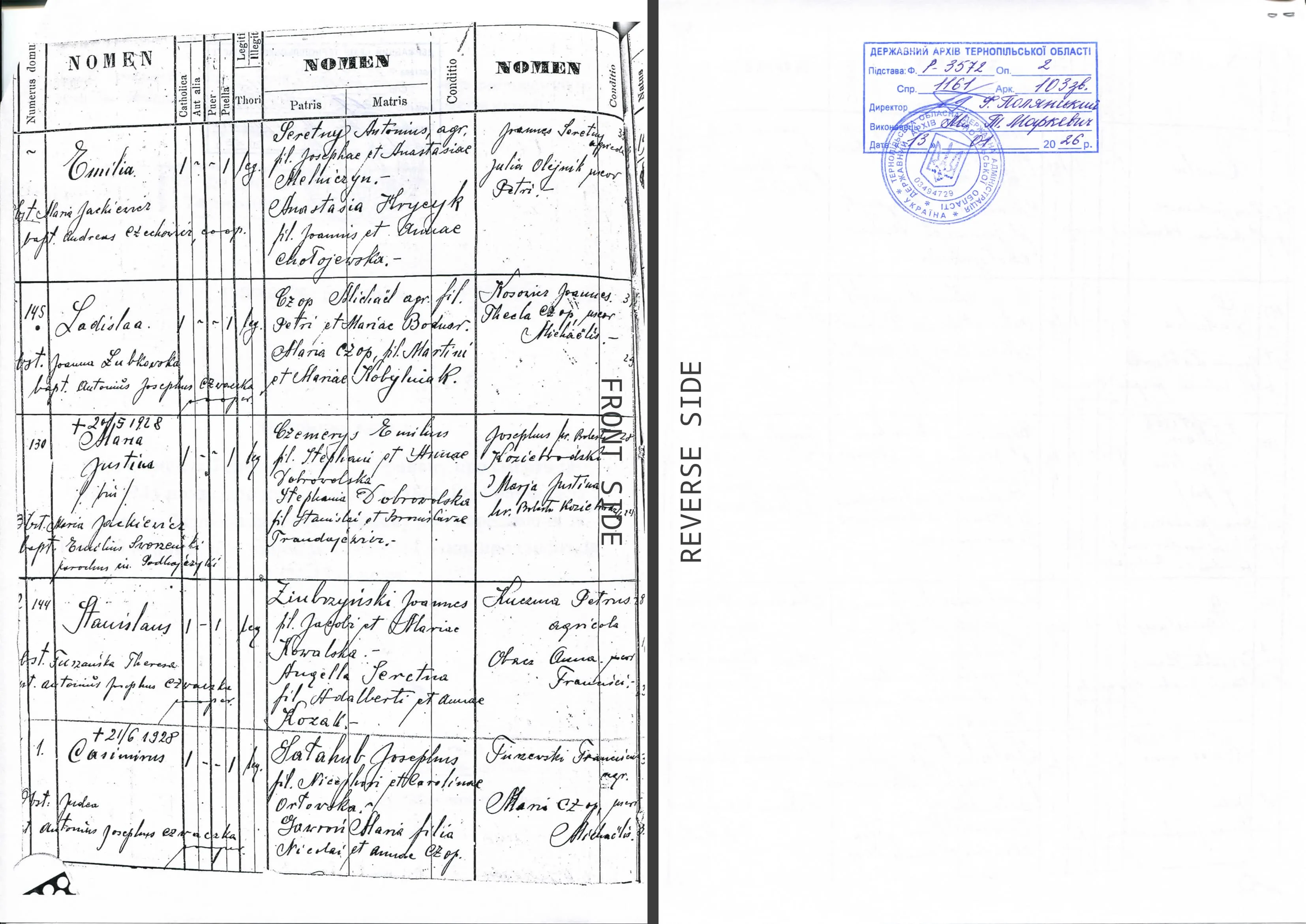
Certified copy of the birth record (Ukraine)
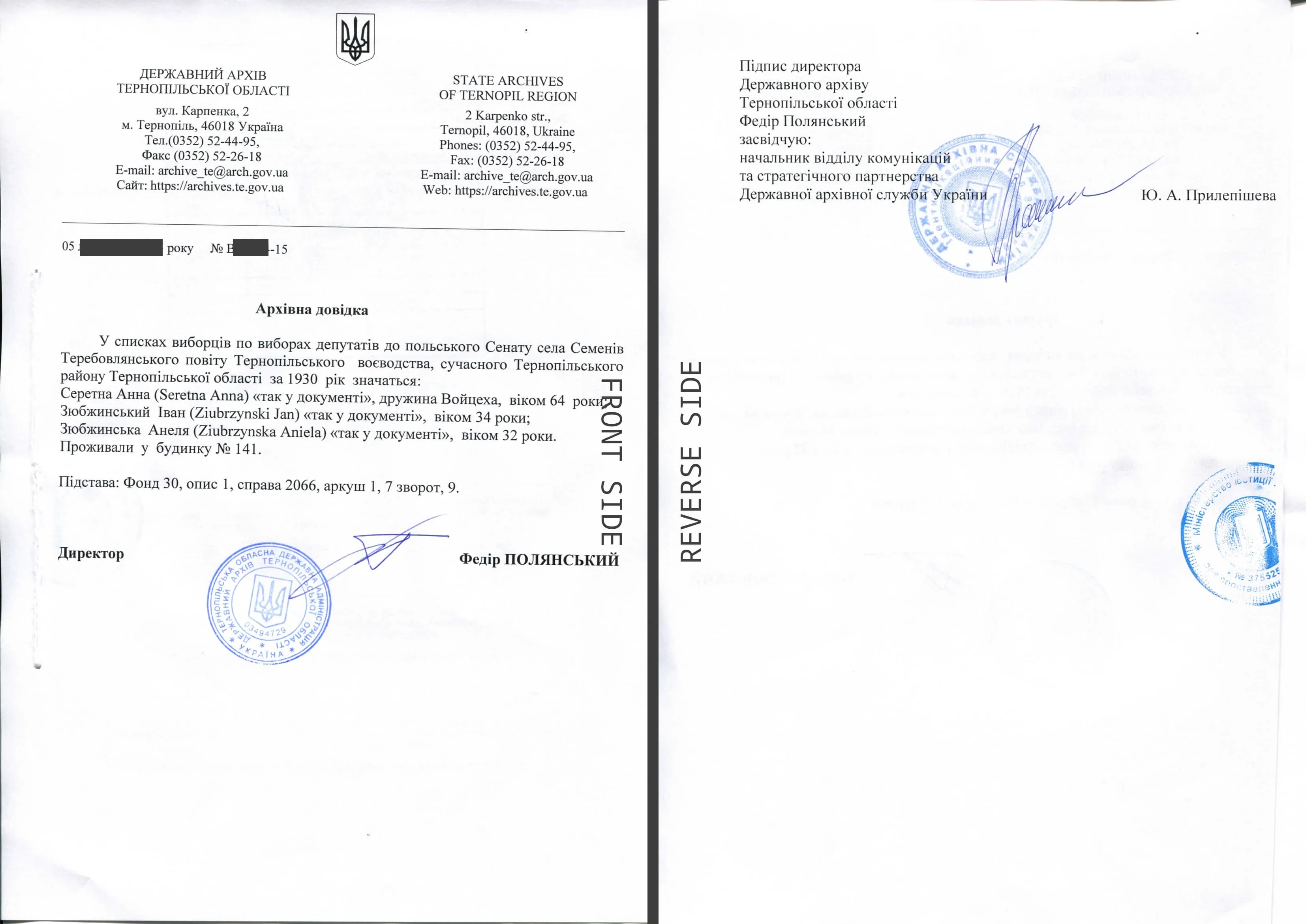
Archival certificate containing data from the voter registration lists for the 1930 Polish Senate elections (Ukraine)
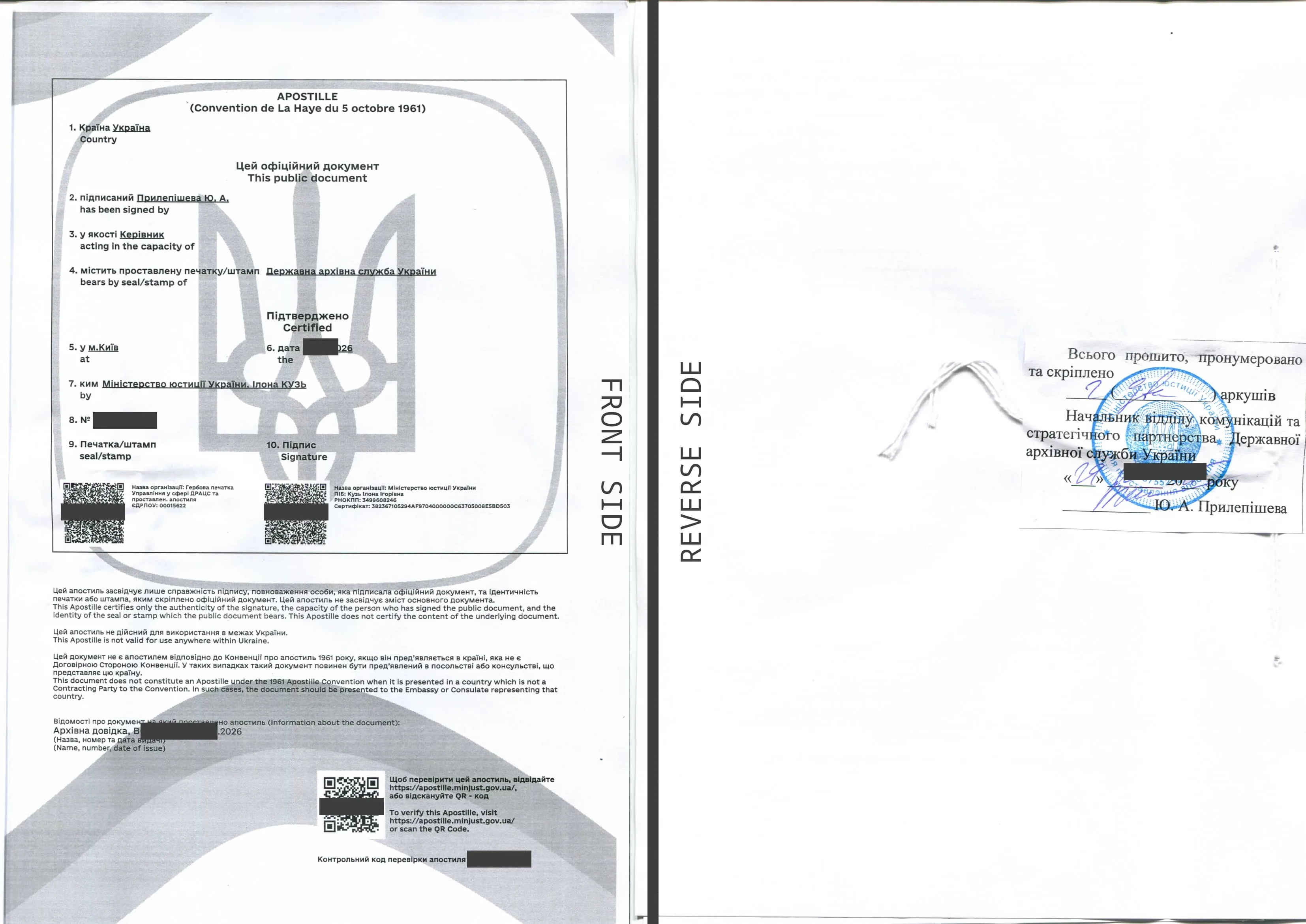
Apostille on archival certificate regarding elections 1930 (Ukraine)
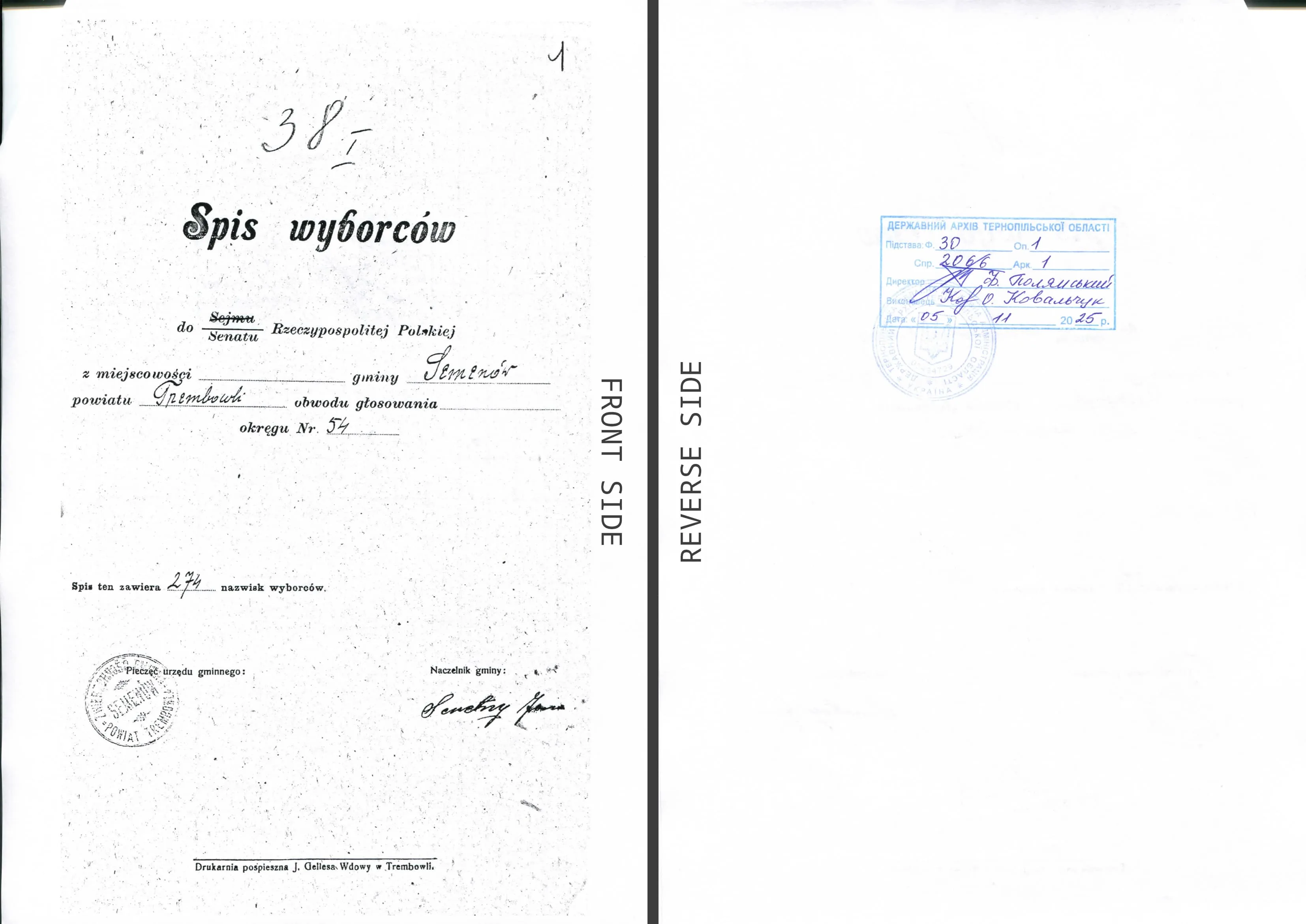
Certified copy of the title page of the voters list 1930 (Ukraine)
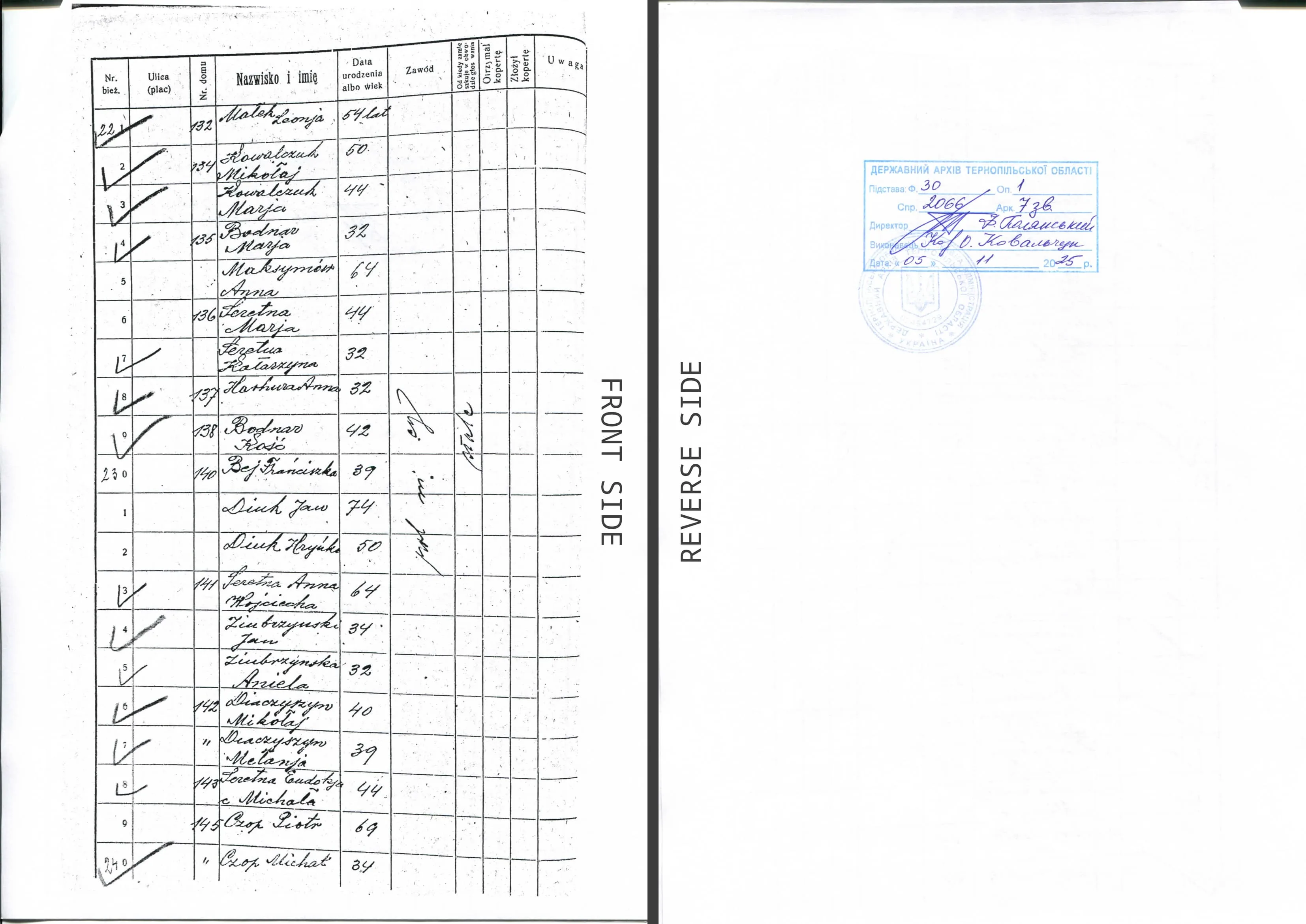
Certified copy of the voters list 1930 (Ukraine)
Territorial Scope
Karta Polaka
Pole’s Card by Polish Origin
Degree of Kinship Eligible for Pole’s Card
Polish Origin Meaning
But it follows from the Act that the ancestor’s historical documents must contain a clear “Polish (Pole/polak/polska)” designation within the “Nationality” (in the sense of ethnicity, not citizenship) column of the document. Similarly, classifications such as “Race,” “People,” or “Tribe” found within North and South American historical documents provide equivalent ethnic confirmation.Goal of Documenting Ancestor’s Polish Origin
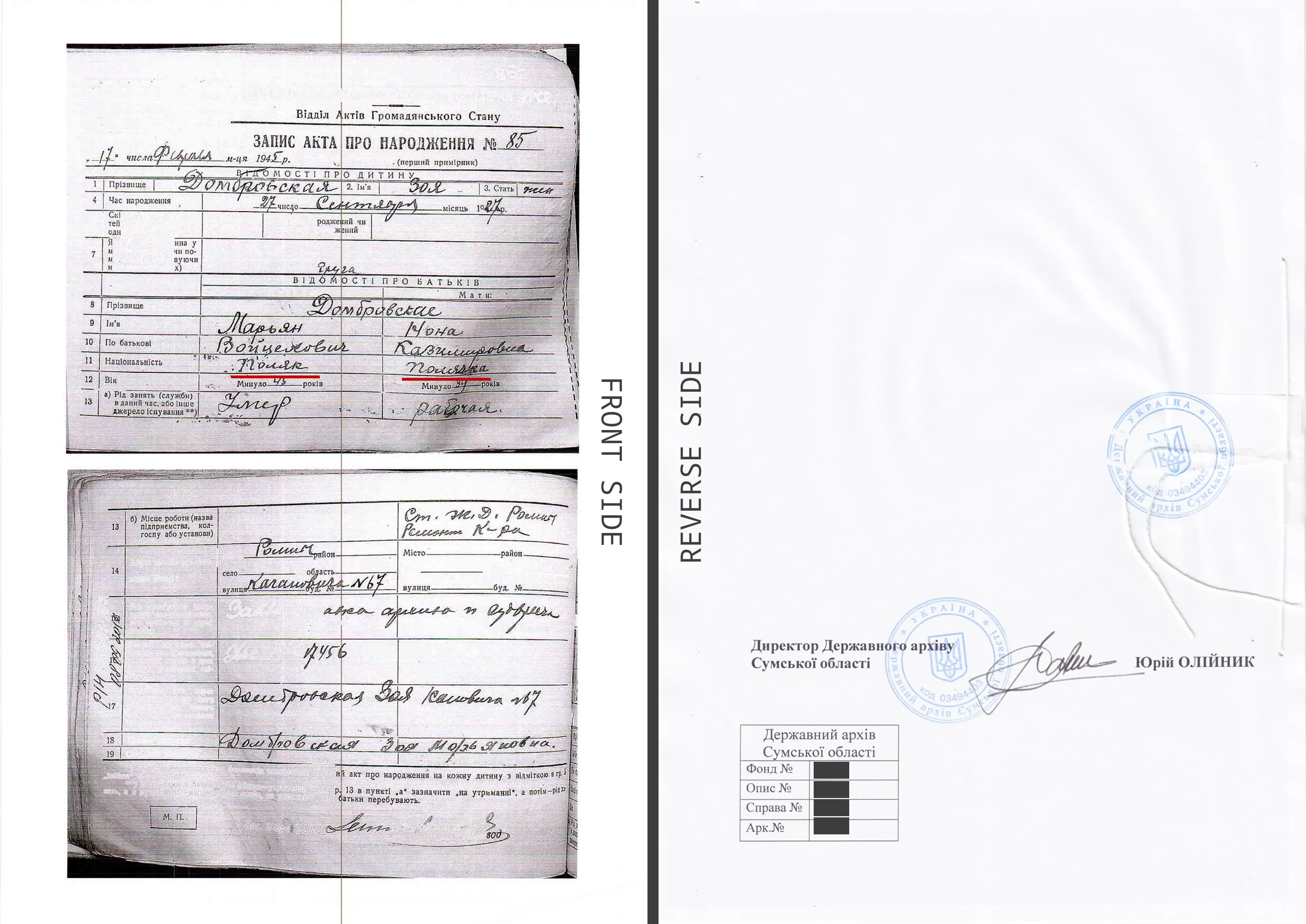
Certified copy of the birth record with Polish nationality (Ukraine)
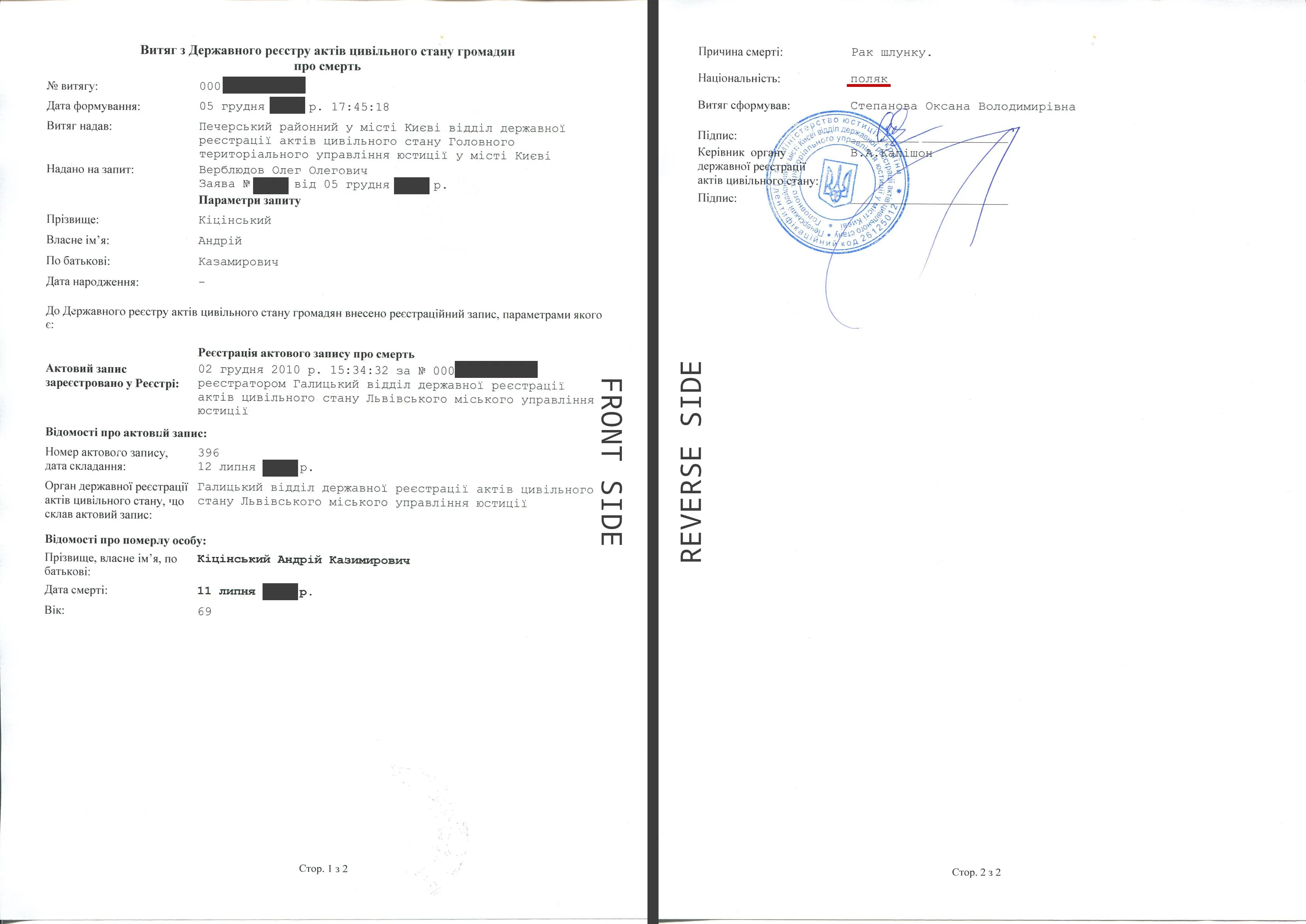
Death extract with Polish nationality (Ukraine)
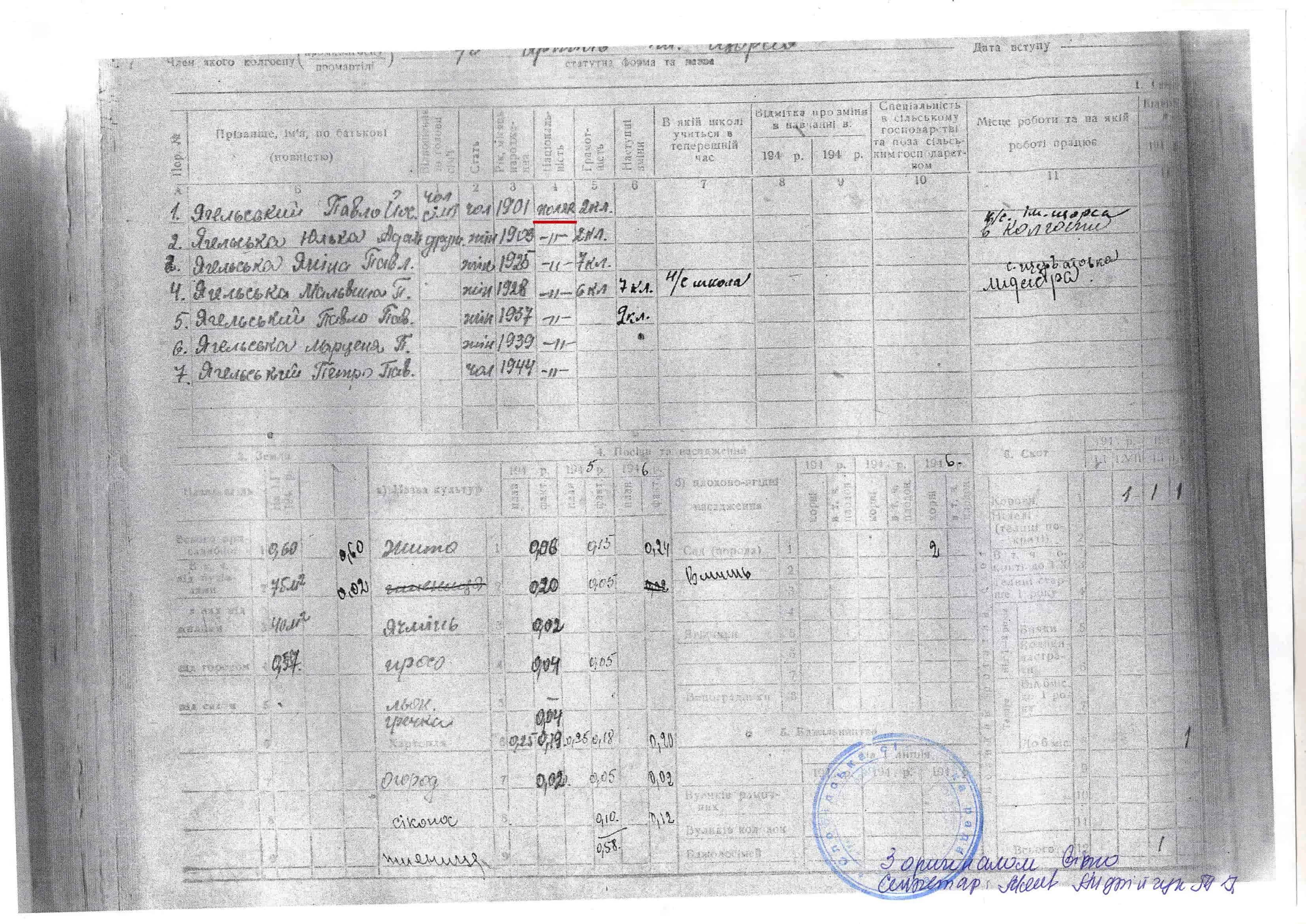
Village household books (Ukraine)
Your expert

Oleg Verbliudov Your Expert Genealogist in Ukraine & Eastern Europe since 2009
Related products
-

Marriage Certificate
150 EUR / document discounted from the regular price of250 EUR -

Hungarian citizenship
150 EUR discounted from the regular price of250 EURfor Expert Assessment -

Jewish Origins
150 EUR discounted from the regular price of250 EURfor Expert Assessment -

Slovak citizenship
150 EUR discounted from the regular price of250 EURfor Expert Assessment